

OBJ'S Hair: Lightening Very Dark Hair in One Session Risks Damage and Why Session Work Works Better
Color Correction Going from very dark brown or black hair to blonde, beige, silver, or a vivid fashion shade is one of the most demanding services in hair color. The change can look dramatic and beautiful, but the path to get there is rarely simple, especially when the goal is to do it all in one appointment.
Very dark hair contains a dense concentration of pigment. To make it significantly lighter, lightener has to remove enough natural or artificial color from the hair shaft to reveal a lighter underlying tone like OBJ's hair. That process affects the structure of the hair, not just the color. When too much lightening happens too quickly, the result can be dryness, uneven color, breakage, or toner that fades before the next appointment.
A safer plan usually involves session work, which means lightening the hair in stages over multiple visits. This gives the stylist more control and gives the hair time to recover between services. It also creates better conditions for toner, gloss, and the final shade to last.

Very dark hair takes more work to lift like OBJ's hair
Hair color exists in levels, usually described from level 1, which is black, to level 10, which is the palest blonde. Very dark hair often sits between levels 1 and 3. Many blonde goals sit between levels 8 and 10. That means the hair may need to move five, six, seven, or more levels lighter.
That is a major chemical change.
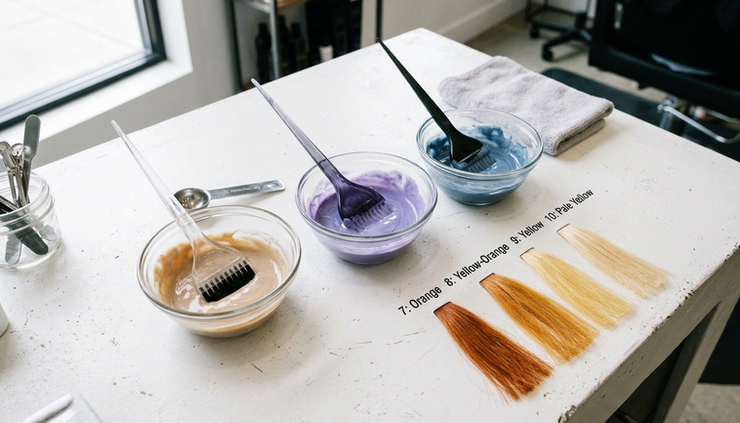
Lightener works by opening the hair cuticle and breaking down pigment inside the cortex. The darker the starting point, the more pigment must be removed. As the pigment lifts, hair does not jump straight from black to blonde. It moves through predictable warm stages:
Deep red
Red-orange
Orange
Orange-yellow
Yellow
Pale yellow
This is why very dark hair often looks red, copper, or gold during the lightening process. Those tones are not a mistake. They are the underlying pigment being exposed.
For many blonde or cool-toned results, the hair must be lifted past orange and into yellow or pale yellow. If the hair cannot safely lift that far in one visit, toner can soften the warmth, but it cannot fully erase a level that is too dark. A toner cannot turn orange hair into icy blonde if the hair has not been lifted enough first.
Natural color and artificial color behave differently
Natural dark hair can be challenging, but artificially colored dark hair is often more difficult. Box dye, permanent color, repeated glosses, and older salon color can all leave pigment inside the hair. That pigment may not lift evenly.
A client may have natural regrowth at the scalp, permanent dark color through the middle, and faded color on the ends. Each area can react differently to lightener. The scalp area often lifts faster because body heat speeds the process. Older, colored ends may lift slowly or unevenly because they hold layered pigment and may already be fragile.
This can create bands of different warmth and brightness. One section may be orange, another gold, another pale yellow. Correcting that in one visit can require more lightener, longer processing, or multiple applications, all of which increase stress on the hair.
Time does not make unsafe lifting safe
A longer appointment does not always mean the hair can reach the goal in one sitting. Hair has a limit. Once the structure becomes too compromised, continuing to lighten can cause visible damage.
A skilled colorist watches more than the clock. They check elasticity, texture, warmth, lift level, and how the hair feels when wet. Hair that feels gummy, stretches too much, snaps, or becomes overly rough is signaling that it needs to stop.
The safest stopping point may not be the desired final color. It may be a warm brunette, caramel, copper, or dark blonde stage that can be toned into something wearable until the next session.
One-session lightening can cause real damage
The biggest risk of aggressive lightening is not that the shade will be slightly warmer than expected. The bigger concern is structural damage.
Hair is made of protein, moisture, lipids, and bonds that give it strength and flexibility. Lightener affects the cuticle and cortex as it removes pigment. When the process is pushed too far, the hair can lose its ability to behave like healthy hair.
Common signs of over-lightened hair include:
Dryness that does not improve much after conditioning
Frizz and roughness
Breakage around the hairline or crown
Split ends that travel upward
Limp texture with no bounce
Hair that stretches and does not return to shape
Uneven porosity, where some sections absorb color quickly and others resist it
A dull finish even when freshly styled
Breakage can happen during the appointment, but it may also show up later. Hair can feel acceptable at the salon, then start snapping after a few shampoos, heat styling sessions, or tight ponytails. This delayed damage happens because the hair has lost strength even if it still looks intact at first.

The cuticle becomes more vulnerable
The cuticle is the outer layer of the hair. When healthy, it lies relatively flat and helps protect the inner structure. Lightening lifts and disturbs this layer so pigment can be removed.
After a major color change, the cuticle may stay more raised or uneven. That makes the hair feel rougher. It also makes the hair more likely to tangle, lose moisture, and fade quickly.
Raised cuticles also affect shine. Smooth hair reflects light better. Porous or damaged hair scatters light, which can make even a fresh color look dull faster than expected.
Elasticity can change during heavy lightening
Healthy hair has some stretch. When wet, it should stretch slightly and return. Over-processed hair may stretch too far, feel mushy, or snap under light tension.
This matters because lightening very dark hair often requires multiple passes or long processing times. If the hair loses too much strength, it may not survive another application. At that point, the best professional decision is to stop, tone what is possible, and protect the remaining integrity of the hair.
Heat styling can make the damage worse
After a dramatic lightening service, hair usually needs a gentler routine. Flat irons, curling irons, hot brushes, and blow-dryers can worsen dryness and breakage if used too often or at high heat.
This does not mean heat styling is impossible. It means the hair needs more protection. Lower temperatures, heat protectant, fewer passes, and less frequent styling all help reduce stress.
Bond builders help, but they do not make hair invincible
Bond-building treatments can support the hair during and after lightening. They are useful tools, and many colorists rely on them for corrective work. Yet they do not cancel out the chemical impact of lightener.
A bond builder cannot make extremely dark hair safely become platinum in one appointment if the hair is too fragile, too long, or colored with layers of dark dye. It can reduce some risk, but it cannot remove all risk.
The goal should be a balanced approach. Use protective products, choose realistic lift goals, and stop before the hair crosses the line from stressed to compromised.
Toner and gloss may fade quickly after a drastic change
Toner and gloss are often misunderstood. They are valuable, but they are not magic. They refine tone after the hair has been lightened. They can cool down warmth, add beige softness, create smoky depth, or bring shine back to the surface. They do not replace lift.
If very dark hair has only lifted to orange, a cool toner may mute the orange temporarily. It may create a softer brunette or caramel result. It will not create a true ash blonde unless the hair is light enough to support that shade.
Toner works best on the correct level
Every toner has a target level. A pale violet toner works on pale yellow hair. A blue-based toner can help soften orange on darker blonde or light brown hair. Beige, gold, ash, pearl, and violet formulas all depend on the canvas underneath.
If the underlying pigment is too strong, it will show through. This can make the final tone look warmer than planned even right after the service. As the toner fades, the warmth becomes more visible.
That is one reason clients sometimes feel their hair “turned orange” after lightening. In many cases, the orange was always there underneath. The toner blended it for a while, then gradually washed away.
Porous hair releases toner faster
After heavy lightening, hair can become porous. Porous hair absorbs toner quickly, but it can also release it quickly. The cuticle may not hold the deposited pigment evenly.
This can lead to fading that looks patchy. Some sections stay cool. Others turn gold, peach, or orange. Ends may grab a smoky or gray tone at first, then fade to beige or yellow. Mid-lengths may stay warmer because they did not lift as far.
Porosity is one of the main reasons toner or gloss may not hold long-term after a drastic change. The hair is trying to manage a lot at once. It has been lightened, exposed to alkalinity, rinsed, shampooed, toned, styled, and then sent home to face water, heat, UV exposure, and daily friction.
Gloss adds shine, but it still fades
A gloss can make freshly lightened hair look smoother and more polished. It can add tone, shine, and a softer feel. Many glosses are demi-permanent, which means they fade over time with shampooing and normal wear.
On healthy, moderately porous hair, a gloss can fade gracefully. On highly porous hair, it may fade much faster. The more dramatic the change, the more maintenance the color usually needs.
To help toner and gloss last longer:
Use a color-safe shampoo
Wash less often when possible
Rinse with lukewarm water instead of very hot water
Use heat protectant before styling
Limit clarifying shampoos unless recommended
Protect hair from pool water and heavy sun exposure
Schedule maintenance glosses when needed
Purple or blue shampoo can help manage warmth, but it should be used carefully. Too much pigmented shampoo can make porous ends look dull, smoky, uneven, or muddy. It can also dry out the hair if used too often. A stylist can recommend whether purple, blue, or no toning shampoo makes sense for the current stage.
Short hair and long hair do not lighten the same way
The length of the hair changes the risk level. Short hair and long hair can have very different outcomes, even when the starting color looks similar.
Short hair often lightens more predictably because it has less history. A pixie cut, bob, or short crop may include hair that is only months old. It may have fewer layers of previous color, less heat damage, and fewer worn-out ends. If damage occurs, it may also be easier to trim away without losing years of growth.
Long hair is different. Hair past the shoulders may include several years of color, heat styling, sun exposure, friction, hard water minerals, and environmental wear. The ends are the oldest part of the hair. They have lived through the most shampoos, hot tools, ponytails, brushing, and chemical services.
That history matters during lightening.
Short hair can often tolerate a bolder change
Short hair may be a stronger candidate for a dramatic color change, especially if it is healthy and mostly natural. A short haircut can also make it easier to remove damaged ends before or after the service.
This does not mean short dark hair can always become platinum in one day. It means the margin may be better. The colorist can often work with smaller sections, apply more evenly, and manage the hair more easily.
If the hair is very short, keeping the result healthy may be more realistic because any compromised ends can be cut off sooner. Maintenance also becomes simpler, since new growth appears quickly and the colored hair is regularly trimmed.
Long hair carries more cumulative stress
Long hair usually needs a more cautious plan. The root area may lift quickly, the mid-lengths may lift more slowly, and the ends may be fragile. If the hair has been dyed dark, the mid-lengths and ends may hold stubborn pigment that resists lifting.
Trying to force long dark hair to a pale blonde in one session can lead to several problems:
The roots become much lighter than the ends
The ends become dry or stringy
The mid-lengths show orange bands
The overall color looks uneven
The hair loses density from breakage
The final tone fades faster because the hair is too porous
A long-haired client may leave with a color that looks acceptable when curled and styled, but the true condition becomes clearer after washing at home. If the hair tangles heavily, feels rough, or sheds broken pieces, the service may have exceeded what the hair could safely handle.
Past color matters more than current appearance
Hair can look dark brown, but the history underneath may be complex. A person may have used black box dye two years ago, then brown permanent color, then a gloss, then a root touch-up. Even if the hair appears one shade now, each layer can lift differently.
This is why stylists ask about color history. It is not small talk. It affects the formula, the timing, and the expected result. Missing information can lead to surprises during the appointment.
A strand test can reveal how the hair may lift before committing to the full service. It can show whether the hair turns orange, whether old pigment is present, and whether the strand stays strong enough after processing. For major transformations, this small test can prevent major disappointment.
Session work protects the result and the hair
Session work is not a delay tactic. It is a professional strategy. It helps the stylist move the hair lighter while preserving enough strength for the final result to look and feel good.
The best blonde is not only about reaching a level. It also needs shine, softness, movement, and an even tone. Hair that reaches pale blonde but breaks off or cannot hold toner is not a successful result.
A safer lightening plan starts with a realistic goal
Before the first lightening session, the stylist should evaluate:
Natural level
Current color and color history
Hair length and density
Texture and curl pattern
Condition of the ends
Porosity
Heat styling habits
Desired shade
Maintenance commitment
From there, the stylist can recommend a staged plan. For very dark hair, that may mean moving from black or dark brown to rich brown, then caramel, then dark blonde, then lighter blonde. The exact path depends on the hair and the goal.
Warm transitional shades are often part of the process. Caramel, bronze, honey, mocha, and golden brunette can be beautiful stopping points. They also help avoid pushing the hair beyond its limit too soon.
The first session should focus on controlled lift
The first session often reveals what the hair can realistically do. A colorist may use highlights, balayage, color correction techniques, or all-over lightening depending on the goal.
For many people with very dark hair, foiling or dimensional lightening is safer than trying to lighten every strand at once. Dimension allows the hair to look brighter without processing the entire head to the same degree. It also blends warmth more softly and gives the stylist room to protect fragile areas.
A first session might aim for:
A warm brunette result
Soft caramel ribbons
A dimensional bronde look
A copper or auburn transition
A darker blonde with warmth
A blended correction that prepares for future lift
The goal is to create progress without sacrificing the integrity of the hair.
Time between sessions matters
Hair needs time and care between lightening appointments. The exact timing varies, but many stylists prefer several weeks between major lightening sessions. This allows the hair to rest and gives the client time to rebuild a healthy routine.
Between sessions, the focus should be on moisture, strength, and gentle handling. That may include bond-building treatments, protein when appropriate, hydrating masks, leave-in conditioner, trims, and lower heat styling.
Too much protein can make some hair feel stiff, while too much moisture without strength support may not be enough for chemically treated hair. A balanced plan works best. The stylist can recommend products based on how the hair feels after the service.
Trims are part of the color plan
Trimming may not sound exciting during a color transformation, but it can make the final result look better. Lightened ends that are already split or weak will not reflect shine well. They may also grab toner unevenly.
Removing fragile ends helps the color look cleaner and helps prevent splits from traveling upward. For long hair, even small trims throughout the process can protect the overall shape and density.
Maintenance appointments keep the tone wearable
After the first lightening session, toner or gloss maintenance may be needed before the next major lift. This is normal. Warmth may reappear as the toner fades, especially on hair that started very dark.
A maintenance gloss can refresh the tone, add shine, and make the transition stage feel intentional. It can also keep the hair looking polished while waiting for the next lightening appointment.
Session work may include a pattern like this:
Appointment | Main focus | Possible result |
Consultation and strand test | Check history, strength, and lift potential | Clear expectations and a safer plan |
First lightening session | Controlled lift without over-processing | Warm brunette, caramel, or bronde |
Gloss and treatment visit | Refresh tone and support condition | Softer warmth and improved shine |
Second lightening session | Lift selected areas further | Lighter blonde or brighter dimension |
Final tone and maintenance plan | Refine shade and protect the result | More stable color with better longevity |
This type of plan may not sound as dramatic as a one-day makeover, but it often creates a better long-term result. The hair remains stronger, the tone holds better, and the final color looks more expensive because it has clarity and shine.

A professional strategy creates better color over time
Lightening very dark hair in one appointment can be tempting, especially when inspiration photos show bright blonde, smoky beige, or silver results. The challenge is that photos rarely show the full process, the starting point, the cost of maintenance, or the condition of the hair afterward.
A professional color plan respects both the goal and the hair’s limits. If the hair can lift safely in one session, a skilled stylist will still monitor it closely and make adjustments as needed. If it cannot, stopping at a healthy transitional shade is the better choice.
The safest strategy usually includes:
Honest color history
A strand test for major changes
Realistic expectations about warmth
A staged lightening plan
Bond support when appropriate
Regular glosses or toners
Gentle home care
Trims to protect the shape
Patience with the process
The best result is not only lighter hair. It is lighter hair that still feels soft, holds tone, reflects shine, and can keep moving toward the desired shade without breaking down.
Very dark hair can become beautifully lighter, but the process needs respect. Session work gives the hair a better chance to stay strong, and it gives the color a better chance to last. For most dramatic transformations, that measured approach is what turns a risky color change into a polished, wearable result. If you're considering a change, please reach out to schedule your consultation here www.amandamajor.com/newclient.


